All categories

War Correspondents and Photojournalists

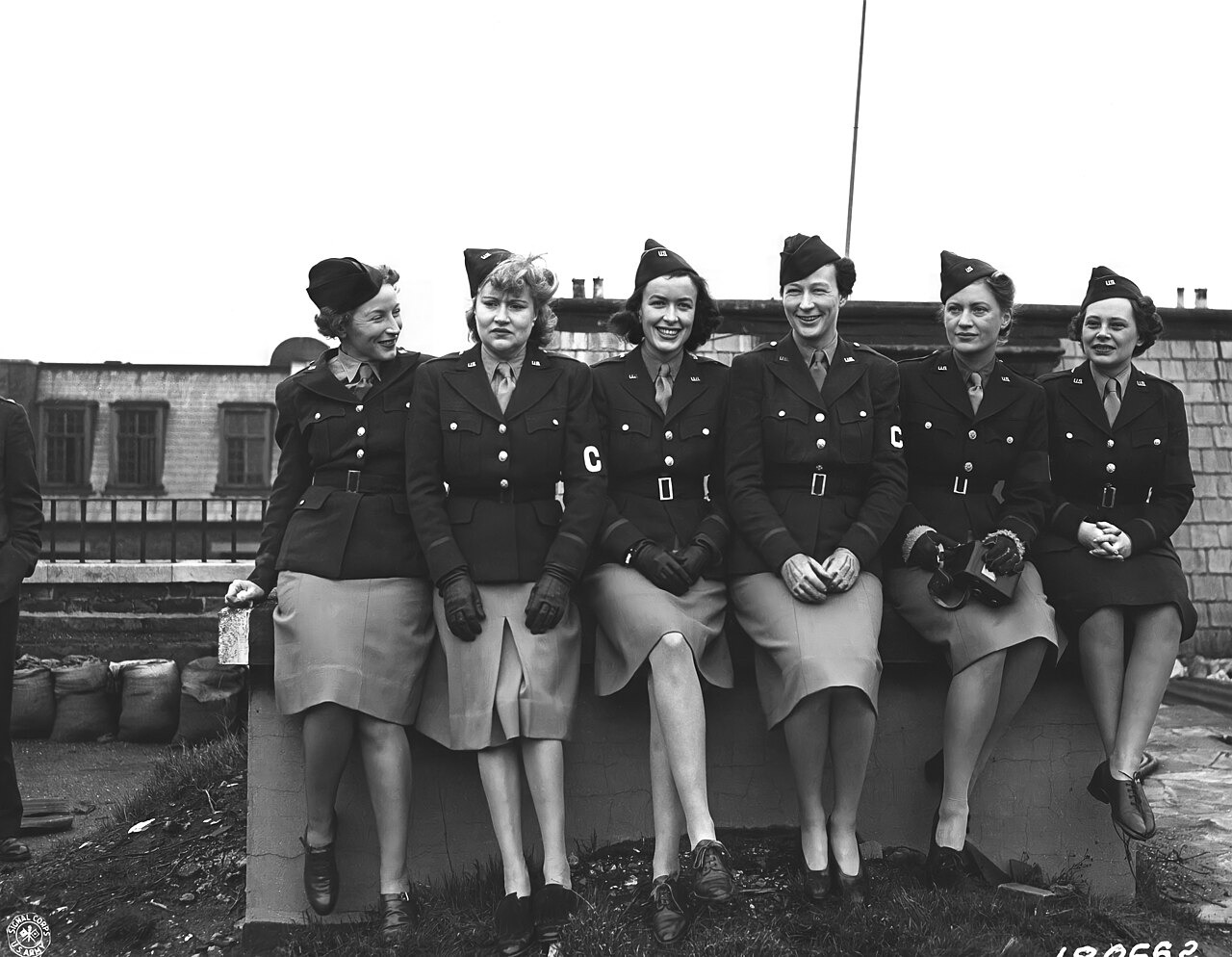
Six women war correspondents who covered the US Army in the European Theater, 1943

War correspondents accredited to the US Army in the European Theater, 1943. Left to right: Mary Welsh, Dixie Tighe, Kathleen Harriman, Helen Kirkpatrick, Lee Miller, and Tania Long.

US Army Official Photograph. Public domain.

Women reporters and photographers covered this war from the front, against the steady resistance of a military establishment that was slow to credential them. They filed from North Africa and the Pacific, from the Italian campaign, the liberation of France, the fight into Germany, and the opening of the camps. Marguerite Higgins walked into Dachau with the 42nd Rainbow Division on 29 April 1945. Lee Miller photographed Buchenwald and Dachau. Margaret Bourke-White made the images of the Buchenwald survivors that ran in Life.
Martha Gellhorn

1908 to 1998

American war correspondent for Collier's Weekly.

Denied accreditation for the Normandy landings, Gellhorn stowed away on a hospital ship, crossed the Channel, and went ashore at Omaha Beach with a stretcher party on the night of 7 June 1944, one of the only women to reach the Normandy beachhead during the invasion. She had already covered the Spanish Civil War and went on to report conflicts around the world for the next half century.

Lee Miller

1907 to 1977

American photographer; war correspondent for British Vogue.

Miller was one of four women accredited as official photographic war correspondents with U.S. forces. She documented the siege of Saint-Malo, the liberation of Paris, and the liberation of Buchenwald and Dachau in April 1945; her images ran in the June 1945 American Vogue under the headline Believe It.

Margaret Bourke-White

1904 to 1971

American photojournalist; Life magazine staff photographer.

Bourke-White was among the first American women accredited as war correspondents and the first authorized to fly U.S. combat missions. She accompanied Patton's Third Army into Buchenwald on 11 April 1945 and her photographs of the survivors are among the most widely reproduced images of the camp's liberation.

Dickey Chapelle

1919 to 1965

American photojournalist; National Geographic and other outlets.

Chapelle was accredited to the Pacific Fleet and became its first credentialed woman photographer at Iwo Jima in 1945. She went ashore at Okinawa in defiance of orders barring women from combat areas, was confined to a Navy ship, and lost her credentials; she was later killed by a land mine in Vietnam in 1965.

Researched and written by · Fortitude Research

Work with Erin

Tell me who
you are looking for.

Start the search About Erin